What Is a Fossil? A Beginner-Friendly Guide for Collectors

what is a Fossil Fish

If you’ve ever picked up an unusual rock and wondered whether it might be something more, you’re already asking the right question: what is a fossil? For fossil collectors—especially beginners—understanding what qualifies as a fossil is the foundation of the hobby.

This guide explains the fossil definition, how fossils form, the different types of fossils, and how collectors can recognize real fossils versus look-alikes. Whether you’re searching creek beds, buying specimens, or building your first collection, this article will give you a solid and reliable starting point.
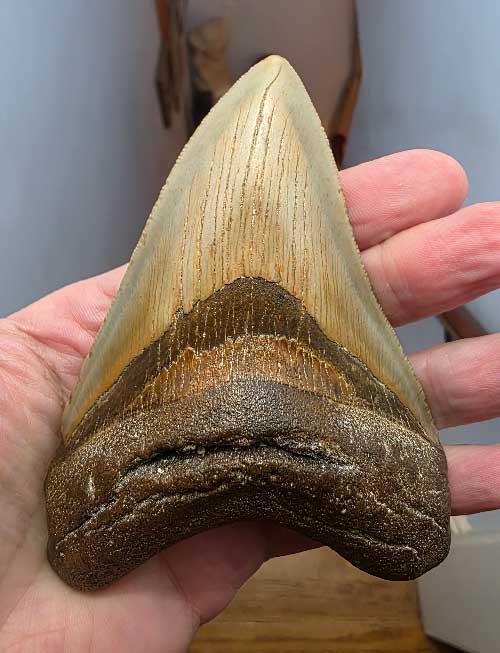
Table of Contents

Fossil Definition: What Exactly Is a Fossil?

At its most basic level, a fossil is evidence of ancient life preserved in the Earth’s crust.

More specifically, fossils are:

  • The preserved remains, impressions, or traces of plants or animals

  • Typically older than 10,000 years

  • Preserved naturally through geological processes

According to the Smithsonian’s explanation of what a fossil is, fossils form when once-living organisms are protected from decay and preserved within sediment and rock over long periods of time.

This means fossils are not limited to bones alone. Shells, teeth, leaves, footprints, burrows, and other forms of biological evidence can all qualify as fossils if they document ancient life.

Is a Fossil a Rock or a Bone?

This is one of the most common beginner questions.

While fossils are often found in rock, most fossils are not bone in their original form. Over time, the original organic material is usually replaced or altered by minerals. As a result:

  • Fossils often feel like stone

  • They are usually heavier than modern bone

  • They may preserve fine details that fresh bone would not

So while a fossil may look like bone, chemically and structurally it behaves more like rock.

How Fossils Form: The Fossilization Process Explained

Understanding how fossils form helps collectors recognize why fossils look the way they do—and why they’re relatively rare.

Step-by-Step Fossilization Process

  1. Death of an organism
    An animal or plant dies, often near water or sediment.

  2. Rapid burial
    Sediment (mud, sand, ash) covers the remains, protecting them from decay and scavengers.

  3. Mineral infiltration
    Groundwater carrying minerals seeps into the buried remains.

  4. Preservation over time
    Minerals slowly replace or fill the original material, turning it into stone.

This process can take thousands to millions of years.

Types of Fossils Collectors Should Know

There are several major types of fossils, and understanding them is essential for identification and classification.

Body Fossils

Fossil Shark Tooth (Otodus megalodon)Body fossils are the preserved physical remains of ancient organisms. These fossils represent parts of the organism’s actual body and are typically the first type of fossil people think of when they hear the word “fossil.”

Common examples of body fossils include:

  • Teeth

  • Shells

  • Bones

  • Plant stems

Body fossils are often the most recognizable fossils because they closely resemble the original organism and may preserve fine details such as surface textures or growth patterns. For collectors, body fossils are especially appealing because they are easier to identify, durable, and commonly found in sedimentary rocks, making them ideal specimens for both beginner and experienced fossil hunters.

Trace Fossils

trace fossil dinosaur foot printTrace fossils record the activity of ancient organisms rather than the physical remains of the organism itself. Instead of preserving bones or shells, trace fossils capture evidence of how an organism lived, moved, and interacted with its environment.

Examples of trace fossils include:

  • Footprints and trackways

  • Burrows and tunnels

  • Feeding marks and grazing traces

  • Coprolites (fossilized dung)

Because trace fossils are created by behavior, they can reveal information that body fossils cannot. They help scientists and collectors understand how animals moved, what they ate, whether they lived alone or in groups, and the types of environments they inhabited. For collectors, trace fossils are especially valuable because they tell a story of ancient life in action, not just what the organism looked like.
Mold Fossils and Cast Fossils

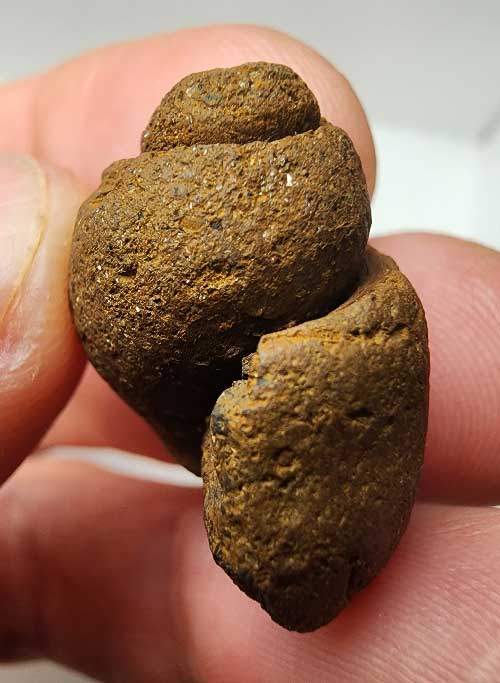
Lunatia halli snail gastropod internal mold fossilThese fossils preserve the shape of an organism rather than its original material. Instead of the organism itself turning to stone, what remains is an impression or replica of its external form.

  • Mold fossils form when an organism, such as a shell, is buried in sediment and later dissolves away, leaving a hollow impression in the surrounding rock.

  • Cast fossils form when minerals or sediment fill that hollow mold and harden, creating a three-dimensional copy of the original organism.

Shell fossils are commonly preserved through molds and casts, which is why collectors often encounter detailed shell shapes even when no original shell material remains. These fossils are especially useful for studying the size, shape, and surface features of ancient organisms.

Permineralization Fossils

permineralization fossils petrified woodPermineralization is one of the most important fossilization processes and is responsible for many of the best-preserved fossils found by collectors. This process occurs when mineral-rich groundwater seeps into buried organic material.

  • Minerals fill tiny spaces within bone or wood

  • The original internal structure is preserved in fine detail

Over time, the organic material is reinforced or partially replaced by minerals, turning the specimen into stone while maintaining its original form. Petrified wood is a classic example of permineralization, often preserving growth rings, bark textures, and internal cell structure. Collectors frequently encounter permineralized fossils because they are durable, visually striking, and retain exceptionally fine details.

Plant Fossils

plant fossils - fern fossilPlants fossilize differently than animals, but they are among the most common fossils found. Because plant material is often buried in fine sediment, it frequently preserves detailed impressions rather than solid remains.

Plant fossils include:

  • Leaf impressions

  • Petrified wood

  • Ferns and seed plants

These fossils are often found in shale and other sedimentary rock layers, where calm conditions allowed delicate plant structures to be preserved. For collectors, plant fossils are excellent specimens for learning fossil identification because they clearly show biological patterns such as veins, stems, and growth structures.

How Old Does Something Have to Be to Be a Fossil?

While there is no absolute rule, most scientists agree that an object must be older than 10,000 years to be considered a fossil. This general guideline helps distinguish fossils from more recent biological remains.

Anything younger than this is usually classified as:

  • Subfossil

  • Archaeological material

  • Modern remains

For collectors, determining age is rarely done by testing the fossil itself. Instead, age is typically inferred from the rock layer in which the fossil is found, along with the known age of that geological formation. This is why understanding basic geology is just as important as recognizing the fossil itself.

Fossils vs. Pseudofossils: Spotting the Difference

Not everything that looks like a fossil actually is one. Many natural geological processes can create shapes and patterns that closely resemble biological forms.

Pseudofossils are natural rock formations that look like fossils but were never part of a living organism. These formations can easily confuse beginners, especially when they occur in fossil-bearing rock layers.

Common pseudofossils include:

  • Dendritic mineral patterns that resemble plant branches

  • Concretions formed by mineral buildup around a core

  • Random fractures or mineral veins in rock

Learning to recognize pseudofossils is an important skill for collectors, as it helps prevent misidentification and ensures that genuine fossils are accurately documented and preserved.

How to Identify Fossils as a Collector

Learning how to identify fossils takes practice, but beginners can improve their success by looking for a few consistent clues that distinguish fossils from ordinary rocks.

Key features to watch for include:

  • Repeating biological patterns such as symmetry or segmentation

  • Textures that differ noticeably from the surrounding rock

  • Presence in sedimentary rock, where fossils most commonly form

  • Sharp boundaries between the fossil and the surrounding matrix

Using a field guide and carefully documenting where each specimen was found can significantly improve identification accuracy over time. Paying attention to rock type, location, and pattern helps collectors build experience and confidence with every find.

Common Fossils Found by Collectors

Many collectors begin with fossils that are both common and durable, making them ideal for learning identification skills and building confidence in the field.

Popular beginner fossils include:

  • Shark teeth

  • Brachiopods

  • Ammonites

  • Trilobite fragments

  • Fossil shells

These fossils are abundant in certain regions and are often found in sedimentary rock layers. Because they preserve recognizable shapes and withstand weathering well, they make excellent learning specimens for beginner collectors while still being valuable additions to more advanced collections.

Why Fossils Matter to Collectors and Science

Fossils are more than collectibles—they are records of Earth’s history that provide direct evidence of how life has changed over time.

They help scientists:

  • Understand evolution and how species developed and went extinct

  • Reconstruct ancient environments such as oceans, forests, and deserts

  • Date rock layers using index fossils, which indicate specific periods in geologic time

For collectors, fossils combine natural history, geology, and the thrill of discovery. Each specimen represents a tangible connection to Earth’s deep past, making fossil collecting both an educational and rewarding pursuit.

Final Thoughts: What Makes Something a Fossil?

So, what is a fossil?

A fossil is:

  • Evidence of ancient life

  • Preserved through natural geological processes

  • A bridge between biology and geology

For collectors, understanding fossils transforms random rocks into meaningful discoveries. With knowledge, patience, and curiosity, even beginners can build a collection that tells a story millions of years in the making—one fossil at a time.

Explore Our Fossil Treasures:

Discover a carefully curated range of fossil specimens chosen for their scientific relevance, authentic preservation, and educational value. Each fossil represents a moment in Earth’s deep past, reflecting the natural processes discussed throughout this site and giving collectors a direct, tangible connection to ancient life.

Fossil FAQs:

Common Questions About Fossils and Fossil Collecting

What is considered a real fossil?

A real fossil is evidence of ancient life that has been naturally preserved through geological processes. This can include bones, shells, plant material, impressions, or traces such as footprints and burrows that are typically older than 10,000 years.

Most scientists consider remains older than 10,000 years to be fossils. Younger material is usually classified as a subfossil, archaeological artifact, or modern remains rather than a true fossil.

Fossils are usually found in rock, but most are no longer bone in their original form. Over time, minerals replace or fill the original material, causing fossils to behave more like stone than fresh bone.

Fossils are most commonly found in sedimentary rock layers such as limestone, shale, and sandstone. These rocks form in environments where sediment can quickly bury and preserve organic material.

Some fossils are rare, but many are quite common. Shells, plant fossils, and small marine organisms are frequently found, while complete skeletons and large vertebrate fossils are much less common.

Yes, plants fossilize very well under the right conditions. Leaf impressions, petrified wood, and fossilized ferns are among the most common plant fossils found by collectors.

Beginners should look for repeating biological patterns, unusual textures, and sharp boundaries between a specimen and the surrounding rock. Fossils are most often found in sedimentary rocks rather than igneous or metamorphic rocks.

Fossil collecting laws vary by location. Many areas allow collecting small, common fossils on private land with permission, while collecting on public lands may be restricted or prohibited. Always check local regulations before collecting.

Related Earth Science News

Geology and Paleontology News​Geology and paleontology research continues to uncover unusual rock layers, mineral discoveries, and hidden structures deep within the Earth. Following Geology and Paleontology News helps collectors and rockhounds understand how thick rock layers, mantle-derived material, and long-lived geological processes shape the rocks and fossils found at the surface.

Ongoing discoveries provide valuable context for identifying specimens, understanding formation environments, and connecting individual finds to broader geological and paleontological patterns observed around the world.
Explore Our Fossil Guides

Learn more about identifying and collecting unusual minerals and rocks in our Collector’s Guides.

Blue Amber from Indonesia
Read More
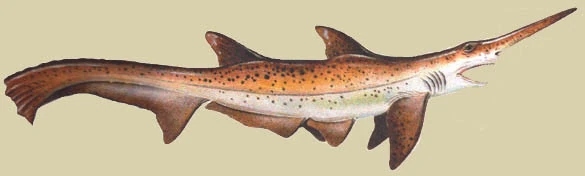
Scapanorhynchus
Read More
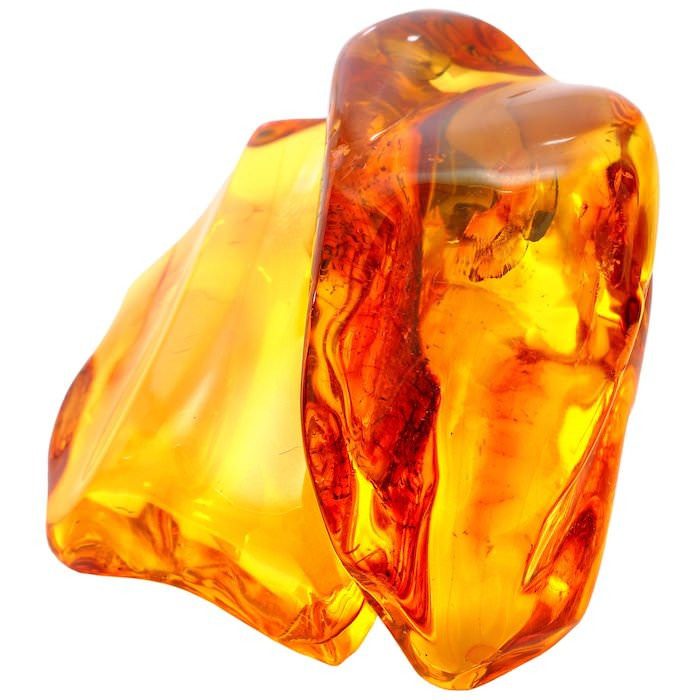
Amber Gemstone
Cart